Energy Surplus & Deficit Concepts
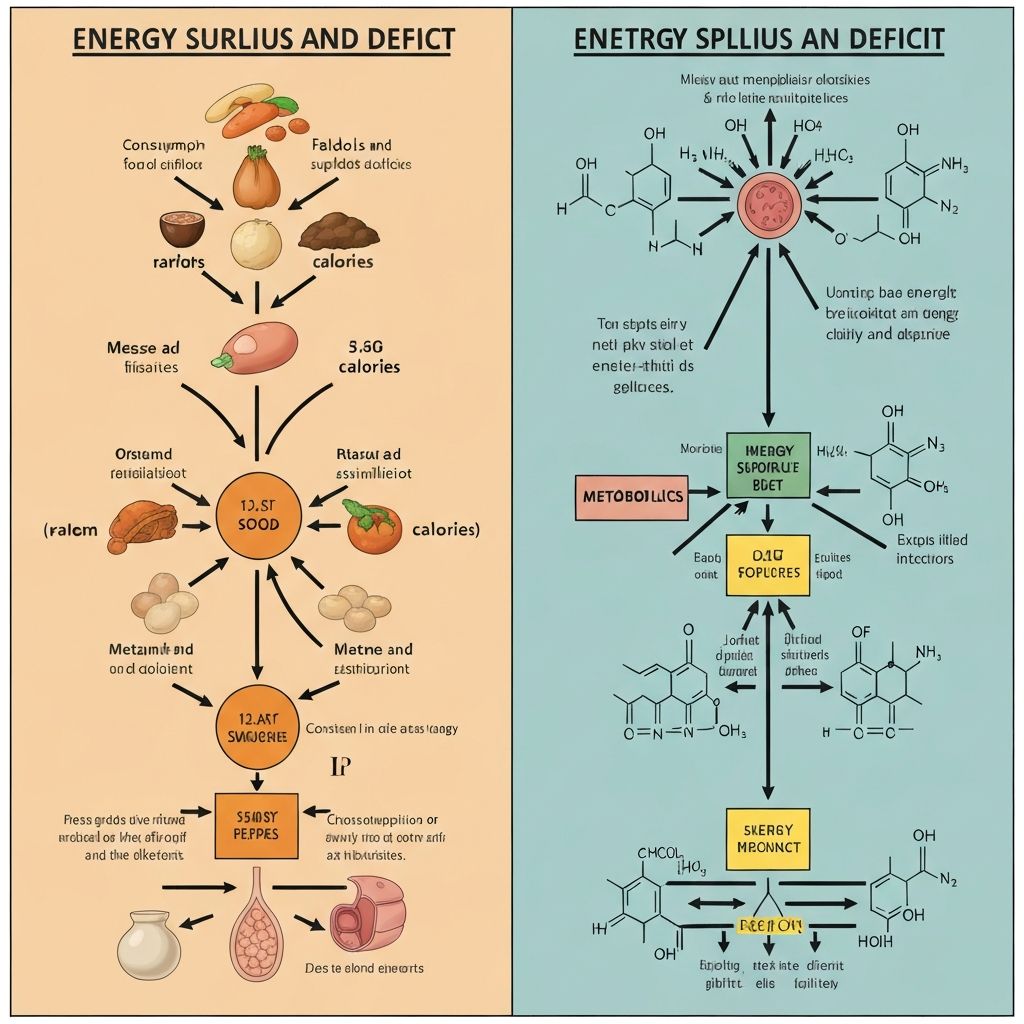
Understanding Energy Balance
Energy balance represents the relationship between energy intake from food and energy expenditure through metabolic processes. This fundamental concept describes how the body regulates body weight through the interplay of calories consumed and calories utilised.
In scientific literature, energy balance is expressed as the difference between energy intake and total energy expenditure (TDEE). When intake exceeds expenditure, an energy surplus occurs. When expenditure exceeds intake, an energy deficit results.
Energy Surplus
An energy surplus occurs when caloric intake exceeds the body's total energy expenditure. In this state, the body has excess energy available beyond what is immediately utilised for metabolic processes and activity.
Research documents how the body responds to prolonged energy surplus through increased energy storage in adipose tissue. The efficiency of this storage and the composition of weight gained involve complex physiological mechanisms influenced by various factors including nutrient composition and individual metabolic differences.
Energy Deficit
An energy deficit occurs when total energy expenditure exceeds caloric intake. In this metabolic state, the body must mobilise stored energy to meet its physiological demands.
During energy deficit, the body accesses stored energy primarily from adipose tissue through a process called lipolysis. The body also makes adaptive changes to energy expenditure and metabolic rate in response to reduced energy availability, as documented in metabolic research.
Individual Variation
Significant individual differences exist in how bodies respond to identical energy surpluses or deficits. These variations reflect genetic factors, metabolic adaptations, hormonal differences, and individual physiological responses.
Population research documents wide variation in weight changes and body composition shifts when individuals are exposed to the same energy conditions, highlighting the complexity of energy balance beyond simple caloric mathematics.
Research Context
Scientific studies on energy balance provide population-level understanding of how energy intake and expenditure relate to body weight changes. However, this research demonstrates that individual responses show substantial variation, and outcomes cannot be predicted with precision for specific individuals.